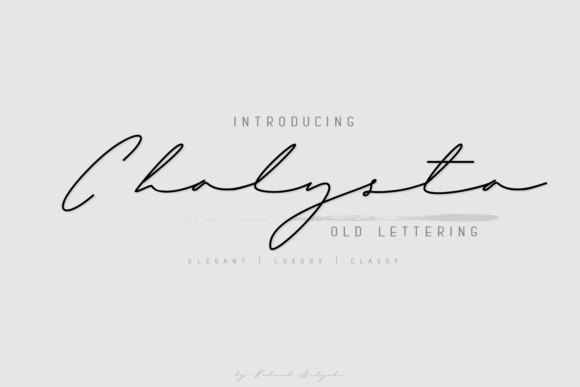
Chalysta: A Handwritten Font for Modern Web and Digital Design
As a web designer, choosing the right font can make or break a digital experience. Chalysta, a thin, flowing handwritten font, brings a personal and elegant touch to modern websites, landing pages, and digital products. Its soft curves and natural rhythm make it ideal for web designers looking to inject warmth and authenticity into their layouts without sacrificing readability or visual clarity.
Chalysta belongs to the Script Amp category, making it a standout choice for creative branding, digital invitations, and expressive web elements. Unlike rigid, overly structured fonts, Chalysta mimics real handwriting, offering a sense of intimacy and craftsmanship that resonates with users. Whether you're designing a wedding website, a boutique online store, or a personal coaching page, Chalysta helps establish a unique brand tone that feels both professional and approachable.
Using Chalysta in Web Design
In digital design, every font must earn its place in the visual hierarchy. Chalysta excels as a display font, particularly in hero sections, logo text, and call-to-action buttons. Its flowing structure draws the eye, making it perfect for headlines and short phrases that need to stand out. When used in a hero header or a landing page banner, Chalysta adds a human touch that sets the tone before the user even reads the content.
For online store owners and SaaS founders, Chalysta can be used to highlight product names, feature highlights, or key value propositions. It works especially well in creative niches like lifestyle branding, wellness coaching, and artisanal product packaging. Pair it with a clean sans serif font for body text to maintain readability while creating contrast and balance in your layout.
Readability and Visual Flow
While Chalysta is a decorative script font, it still maintains a level of legibility that makes it suitable for digital use. On light backgrounds and clean layouts, Chalysta reads clearly and gracefully. However, for small buttons or dense paragraph text, it's best reserved for short, impactful phrases rather than long-form content.
When designing for mobile responsiveness, consider using Chalysta at larger sizes for headings and reduce font weight for subtle accents. Avoid using it on dark backgrounds without sufficient contrast, as its thin strokes can become hard to read. When overlaying it on images, apply a semi-transparent background or text shadow to ensure legibility without losing the font’s delicate charm.
Brand Identity and Emotional Impact
Fonts are more than just letters—they're part of a brand’s voice. Chalysta’s flowing style communicates creativity, elegance, and sincerity. It pairs well with minimalist design trends, helping brands stand out without overwhelming the user. Whether you're building a creative portfolio, launching a digital course, or crafting a personal blog header, Chalysta enhances the emotional resonance of your message.
Its versatility makes it suitable for both digital and print applications. From social media graphics to packaging design, Chalysta maintains a cohesive look across brand assets. This consistency reinforces brand recognition and trust, especially for small businesses and independent creators looking to build a strong visual identity.
Practical Font Pairing Strategies
For web designers, effective font pairing is essential. Chalysta works best when paired with a simple, highly readable font. Consider using a modern sans serif like Montserrat, Open Sans, or Lato for body text and navigation menus. This contrast creates a visual rhythm that guides the user through the page while maintaining a cohesive design language.
If you're aiming for a more editorial or refined digital identity, try pairing Chalysta with a serif font like Playfair Display or Merriweather. This combination adds sophistication and depth, particularly for blog headers, quote sections, or luxury branding projects.
Technical Considerations for Web Use
Before integrating Chalysta into your website or digital product, check the available font styles, weights, and file formats. Most modern fonts include webfont versions in WOFF or TTF formats, ensuring compatibility across browsers and devices. If Chalysta includes alternate characters or ligatures, use them selectively to enhance visual interest without compromising performance.
Also, verify multilingual support if your website caters to an international audience. Some script fonts may lack extended language characters, which can limit their usability in global branding efforts.
Font Licensing and Commercial Use
When using Chalysta for client work, online stores, or landing page templates, ensure you have the appropriate commercial license. Many premium fonts come with usage rights for web design, but it's crucial to review the licensing terms before deployment. Proper licensing ensures legal compliance and protects your brand from potential copyright issues.
For SaaS founders and digital product creators, including Chalysta in a brand kit or design template adds value for users. Just make sure the license allows redistribution or embedding within downloadable assets if you're offering design templates or branded content packs.
Final Example: Chalysta in Action
Imagine designing a landing page for a wellness coach. The hero section features a soft background image of a sunrise, with the headline “Your Journey Starts Here” in Chalysta. Below, a clean sans serif introduces the coaching services and benefits. The result is a visually balanced layout that feels warm, inviting, and trustworthy.
Or picture a boutique online store selling handmade candles. The product names and taglines are set in Chalysta, while the descriptions and pricing use a simple, modern font. This pairing creates a distinct brand personality that aligns with the product’s artisanal nature.
Chalysta is more than just a font—it’s a design asset that enhances digital storytelling, brand tone, and user engagement. When used thoughtfully, it elevates web design from functional to expressive, helping creators build memorable and emotionally resonant digital experiences.